Introduction
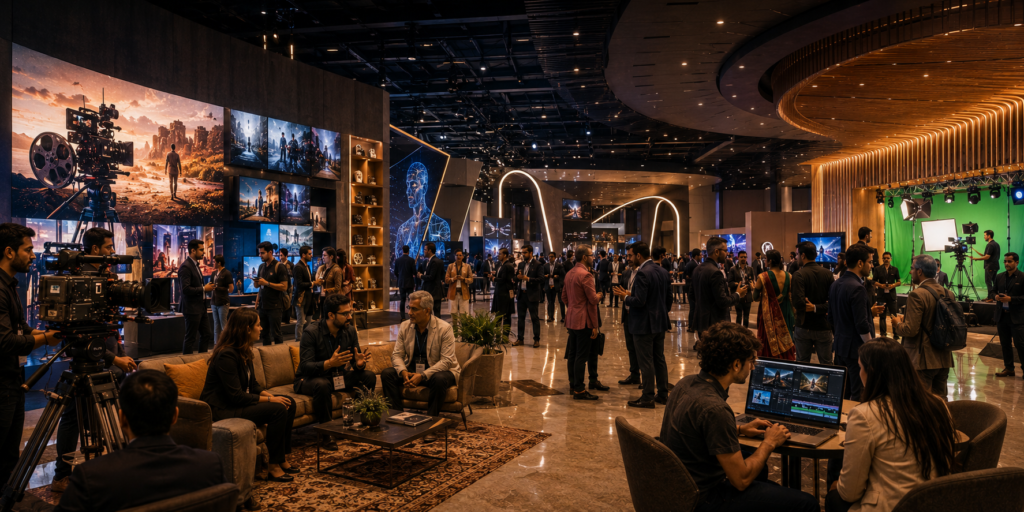
A film industry networking event in India has become one of the most valuable opportunities for filmmakers, producers, studios, investors, and content creators to connect, collaborate, and grow. Film Expo India 2026 brings together the entire entertainment ecosystem under one roof, creating an ideal platform for business networking, knowledge sharing, and industry innovation.
This shift has made every film industry networking event in India more than just a place to exchange business cards. These gatherings have evolved into collaborative ecosystems where filmmakers meet producers, investors discover promising projects, distributors explore new content, technology companies demonstrate innovations, and government agencies introduce initiatives that support domestic and international productions.
For independent filmmakers, attending industry events such as Film Expo India 2026 can open doors to valuable opportunities, including finding the right producers, securing project financing, and connecting with distributors who can help bring their stories to wider audiences. Likewise, established production houses participate to discover emerging talent, evaluate the latest filmmaking technologies, and build strategic partnerships that enhance creativity and business growth. Furthermore, equipment manufacturers, post-production studios, OTT platforms, technology providers, and creative service companies use Film Expo India 2026 to showcase their innovations, connect directly with key decision-makers, and contribute to shaping the future of India’s film and entertainment industry.
In an industry where timing, trust, and collaboration influence success as much as artistic vision, networking is no longer optional. It has become a strategic investment in long-term career growth and business development.
This article explores why filmmakers at every stage of their careers should actively participate in industry networking events, the opportunities these platforms create, and how meaningful professional connections can contribute to sustainable success in today’s evolving entertainment landscape.
The Modern Film Industry Thrives on Collaboration
Every successful film represents the combined efforts of hundreds of professionals working across multiple disciplines. Directors rely on cinematographers, producers coordinate financing and logistics, editors shape the final narrative, while distributors and marketing specialists ensure the finished project reaches its intended audience.
Because filmmaking depends on collaboration, building a strong professional network is one of the most valuable investments anyone in the industry can make.
Why Networking Matters More Than Ever
The entertainment landscape has become increasingly interconnected. Traditional production models now coexist with digital-first content, streaming platforms, international co-productions, and independent filmmaking. As opportunities diversify, professionals must collaborate across industries, technologies, and geographic boundaries.
Networking events facilitate these collaborations by bringing together stakeholders from every segment of the filmmaking ecosystem, including:
- Film producers
- Directors
- Screenwriters
- Production houses
- Cinematographers
- Visual effects specialists
- Animation studios
- OTT platforms
- Investors
- Film distributors
- Equipment manufacturers
- Film commissions
- Government agencies
- Educational institutions
- Technology providers
The result is a collaborative environment where creative ideas can evolve into commercially viable projects through shared expertise and complementary resources.
How Networking Accelerates Film Careers
Many successful filmmaking careers are built not only on talent but also on meaningful professional relationships developed over time.
Industry networking events provide structured opportunities to establish these relationships in ways that digital communication alone often cannot achieve.
Access to Decision-Makers
Breaking into the film industry can be challenging because many opportunities arise through trusted professional networks rather than public job listings.
Networking events enable filmmakers to meet:
- Studio executives
- Producers
- Commissioning editors
- Content acquisition teams
- Investors
- Film commissioners
- Production managers
- Festival organizers
These face-to-face interactions create opportunities to introduce projects, exchange ideas, and initiate conversations that may lead to future collaborations.
Building Long-Term Professional Relationships
Networking should not focus solely on immediate business outcomes. Sustainable careers are built through relationships based on mutual trust, professionalism, and shared interests.
Professionals who consistently engage with the industry often develop networks that generate referrals, repeat collaborations, mentorship opportunities, and strategic partnerships over many years.
Discover Emerging Technologies Before They Become Industry Standards
Technology continues to reshape every stage of filmmaking, from pre-production planning to audience engagement.
Attending a film industry exhibition in India allows professionals to evaluate innovations firsthand rather than relying solely on online research or product demonstrations.
Key Technology Trends Influencing Modern Filmmaking
Artificial Intelligence
AI-powered tools now assist with:
- Script analysis
- Production scheduling
- Automated editing
- Dialogue enhancement
- Visual effects
- Content localization
- Audience analytics
Understanding these technologies helps production teams improve efficiency while maintaining creative quality.
Virtual Production
LED volumes, real-time rendering, and game engine technologies have revolutionized filmmaking by enabling realistic environments without extensive location shooting.
Benefits include:
- Reduced production costs
- Greater creative flexibility
- Faster production timelines
- Improved visual consistency
- Enhanced collaboration between departments
Cloud-Based Post-Production
Modern post-production increasingly relies on cloud workflows that enable editors, VFX artists, sound designers, and producers to collaborate from different locations.
This flexibility supports international productions and remote creative teams while improving project management efficiency.
Why Face-to-Face Networking Still Matters in the Digital Era
Social media platforms, professional networking websites, and virtual meetings have undoubtedly expanded communication within the entertainment industry. However, digital interactions rarely replicate the depth of trust established through in-person conversations.
Meeting industry professionals at exhibitions, conferences, and business networking events provides opportunities to discuss projects in greater detail, demonstrate expertise, and establish credibility in ways that email exchanges or online messages often cannot achieve.
Face-to-face interactions also encourage spontaneous discussions that can lead to unexpected collaborations, introductions, and business opportunities. Many successful partnerships begin with informal conversations during networking sessions, panel discussions, or technology demonstrations
Film Financing Opportunities: Turning Great Ideas into Fundable Projects
For many filmmakers, the biggest challenge is not writing a compelling script or assembling a talented crew. It is securing the financial resources needed to transform a creative vision into a completed production. Regardless of whether a project is an independent feature film, documentary, web series, animation project, or OTT original, access to funding often determines whether production moves forward.
A film industry networking event in India offers a unique environment where filmmakers can connect directly with investors, production companies, broadcasters, OTT platforms, government representatives, and private funding organizations. Instead of sending countless emails or waiting for responses to unsolicited proposals, creators have the opportunity to present their ideas in person and receive immediate feedback.
Where Filmmakers Can Find Funding Opportunities
Industry events bring together a wide range of funding sources, including:
- Private film investors
- Production houses seeking new projects
- OTT commissioning teams
- International co-production partners
- Film development funds
- Government-backed incentive programs
- Brand sponsorship opportunities
- Corporate entertainment divisions
Meeting these stakeholders in person helps filmmakers better understand investment expectations, market demand, and commercial viability before entering formal negotiations.

Preparing Before Meeting Investors
A successful funding conversation begins long before the event itself. Filmmakers should arrive prepared with:
- A concise project pitch
- A professionally written synopsis
- Budget estimates
- Target audience analysis
- Revenue and distribution strategy
- Visual references or mood boards
- Previous work or showreel
- Production timeline
Well-prepared creators inspire confidence and demonstrate professionalism, increasing the likelihood of follow-up meetings.
How Networking Opens Doors to OTT Platforms
The rapid growth of streaming services has transformed the entertainment industry. Today’s audiences consume films, documentaries, web series, and short-form content across multiple digital platforms, creating new opportunities for filmmakers beyond traditional theatrical distribution.
OTT platforms continuously seek fresh stories, regional content, documentaries, and original programming. However, identifying the right decision-makers and understanding platform requirements can be difficult without industry exposure.
Networking events create opportunities to interact with:
- Content acquisition teams
- Original programming executives
- Development managers
- Distribution specialists
- International content buyers
These conversations help filmmakers gain valuable insights into current commissioning trends, preferred genres, audience preferences, and content strategies.
What OTT Platforms Typically Look For
Although every platform has its own acquisition strategy, many evaluate projects based on:
| Evaluation Factor | Why It Matters |
|---|---|
| Strong storytelling | Drives audience engagement |
| Market demand | Improves commercial success |
| Unique concept | Differentiates content |
| Production quality | Reflects professional standards |
| Budget feasibility | Reduces financial risk |
| Audience appeal | Expands viewership potential |
| Distribution strategy | Supports long-term revenue |
Understanding these expectations allows filmmakers to develop projects that align more closely with current market opportunities.
Exploring Co-Production Opportunities
As filmmaking becomes increasingly global, international collaboration is no longer limited to large studios. Independent filmmakers, regional production companies, and emerging creators are actively participating in cross-border productions that combine creative expertise, financial resources, and access to wider audiences.
Benefits of Co-Productions
International collaborations can provide:
- Shared production costs
- Access to international talent
- Expanded filming locations
- Distribution across multiple territories
- Tax incentives
- Government support
- Technology sharing
- Greater investment opportunities
Co-productions also help filmmakers enter new markets while strengthening relationships with overseas production companies.
Understanding Film Distribution Beyond Theatrical Release
Completing a film is only part of the journey. Without an effective distribution strategy, even exceptional productions may struggle to reach audiences.
Modern distribution includes numerous channels beyond traditional cinema releases.
Today’s Distribution Landscape
- Theatrical distribution
- OTT streaming
- Television broadcasting
- International licensing
- Airline entertainment
- Educational distribution
- Film festivals
- Digital rentals
- Transactional Video on Demand (TVOD)
- Advertising-supported streaming platforms
Industry networking events allow filmmakers to meet distributors representing these channels, helping them understand which strategy best suits their project.
Why Equipment Demonstrations Matter
Technology influences every stage of filmmaking. Cameras, lighting systems, drones, virtual production solutions, sound equipment, editing software, AI-assisted workflows, and post-production tools continue to evolve rapidly.
Reading specifications online cannot replace hands-on experience.
At industry exhibitions, professionals can:
- Compare competing products
- Watch live demonstrations
- Test equipment
- Ask technical questions
- Understand workflow integration
- Learn from certified experts
- Evaluate return on investment
These experiences enable production companies to make informed purchasing decisions while improving production efficiency.
Learning Directly from Industry Leaders
Knowledge-sharing sessions remain one of the most valuable aspects of professional industry events.
Expert-led discussions provide insights into:
- Film financing
- Global production trends
- Artificial Intelligence in filmmaking
- Virtual production
- Visual effects
- Film marketing
- Distribution strategies
- Copyright protection
- International collaborations
- Future audience behaviour
Unlike online tutorials, these sessions often include real-world case studies, audience interaction, and practical business advice from experienced professionals.
Government Film Bodies and Production Incentives
Governments increasingly recognize cinema as both a cultural asset and an economic driver. As a result, many regions now offer incentives to attract domestic and international productions.
These may include:
- Cash rebates
- Tax incentives
- Simplified permissions
- Location assistance
- Production facilitation
- Infrastructure support
- Local crew databases
- Equipment access
Networking directly with film commissions and government representatives allows producers to better understand eligibility requirements and regional filming opportunities.
Building Relationships with Service Providers
A successful film production depends on a wide network of specialist companies.
Industry events help filmmakers identify trusted partners for:
- Casting
- Sound design
- Music production
- Editing
- Colour grading
- Visual effects
- Animation
- Equipment rental
- Insurance
- Legal services
- Marketing
- Public relations
Developing relationships with experienced service providers can improve production quality while reducing operational challenges.
Frequently Asked Questions (Schema-Ready)
1. Why should filmmakers attend a film industry networking event in India?
A film industry networking event in India enables filmmakers to connect with producers, distributors, OTT platforms, investors, technology providers, and government film bodies. These events create opportunities for partnerships, funding, project development, and business growth while helping professionals stay informed about emerging trends in filmmaking and media.
2. Who should attend a film industry exhibition?
Film industry exhibitions are valuable for a wide range of professionals, including:
- Filmmakers
- Producers
- Directors
- Screenwriters
- Production houses
- Studios
- OTT platforms
- Film distributors
- Investors
- Equipment manufacturers
- Animation and VFX companies
- Post-production studios
- Film students
- Media professionals
- Government film commissions
Anyone involved in the business or creative side of cinema can benefit from attending.
3. How do networking events help independent filmmakers?
Independent filmmakers often face challenges in securing funding, distribution, and industry visibility. Networking events provide direct access to producers, investors, distributors, and content buyers, making it easier to present projects, receive expert feedback, and build relationships that can lead to future collaborations.
4. What should filmmakers prepare before attending an industry event?
To maximize networking opportunities, filmmakers should prepare:
- A concise project pitch
- Professional business cards
- Updated portfolio or showreel
- Project synopsis
- Budget overview
- Production timeline
- LinkedIn profile
- Digital presentation materials
- Questions for potential collaborators
Preparation helps create a strong first impression and supports more productive business discussions.
5. What are the biggest advantages of attending a film business networking event?
Some of the most significant benefits include:
- Expanding professional networks
- Discovering film financing opportunities
- Exploring co-production partnerships
- Learning about new filmmaking technologies
- Meeting OTT content teams
- Connecting with distributors
- Understanding government incentives
- Building long-term business relationships
- Identifying new markets for film distribution
6. How do film industry exhibitions support technological innovation?
Film exhibitions showcase the latest advancements in cameras, lighting, virtual production, artificial intelligence, editing software, sound technology, VFX, animation, and post-production solutions. Live demonstrations allow filmmakers to evaluate new tools and understand how they can improve production quality and workflow efficiency.
7. Can film students benefit from attending networking events?
Absolutely. Film students gain exposure to industry professionals, emerging technologies, career opportunities, internships, workshops, and mentorship. Attending networking events early in their careers helps students understand industry expectations while building valuable professional connections before entering the workforce.
Conclusion
Success in today’s film industry depends on much more than creative talent alone. The ability to build meaningful professional relationships, understand evolving technologies, identify financing opportunities, explore new distribution models, and stay informed about market trends has become equally important. Industry networking events provide a unique environment where filmmakers, producers, studios, investors, technology providers, government bodies, and service companies can exchange ideas, establish partnerships, and discover opportunities that are difficult to replicate through digital communication alone.
For both emerging creators and established professionals, participating in industry events is an investment in long-term career growth, business development, and creative collaboration. As the global entertainment ecosystem continues to evolve, those who actively engage with the wider industry are often better positioned to adapt, innovate, and bring ambitious projects to life.
One example of such a collaborative platform is Film Expo India, a large-scale international film and media industry exhibition and B2B marketplace scheduled from 26–30 August 2026 at Bharat Mandapam, New Delhi. Curated by Exhobuzz Pvt Ltd, it brings together filmmakers, producers, studios, OTT platforms, distributors, investors, technology providers, exhibitors, government film bodies, film commissions, and entertainment professionals from India and around the world. Through exhibitions, live product demonstrations, panel discussions, pitching sessions, networking forums, technology showcases, and initiatives such as “Shoot in India,” the platform reflects many of the collaborative opportunities discussed throughout this article. Rather than simply showcasing products and services, it represents a business-focused environment where innovation, knowledge sharing, strategic partnerships, investment opportunities, and sustainable film industry growth can flourish. Register as a Visitor: