Introduction
The global film and entertainment industry has evolved into a highly interconnected ecosystem where creativity and business go hand in hand. Producing exceptional content is no longer enough to stay competitive. Success increasingly depends on building strong professional relationships, adopting emerging technologies, discovering new markets, and creating long-term business opportunities.
This is where trade show marketing becomes a powerful growth strategy. Unlike traditional advertising, trade shows bring together decision-makers, investors, production companies, technology providers, distributors, broadcasters, and creative professionals in one place. Instead of searching for potential clients individually, businesses can interact with hundreds of qualified prospects over just a few days. Film Expo India 2026 is one such industry platform that reflects how trade shows foster collaboration, innovation, and business growth across the global film and entertainment ecosystem.
For companies operating in filmmaking, production, post-production, broadcasting, OTT services, animation, visual effects, equipment manufacturing, or media technology, exhibiting at a specialised industry event offers far more than brand exposure. It creates opportunities to demonstrate expertise, establish credibility, launch innovative solutions, secure partnerships, and generate valuable business leads.
As competition continues to increase across the global entertainment landscape, organisations that actively participate in industry exhibitions are often better positioned to expand their market reach, strengthen customer relationships, and stay ahead of changing trends. Understanding how to leverage these events effectively can make a significant difference in long-term business growth.
What Is Trade Show Marketing?
Trade show marketing is a business strategy in which organisations showcase their products, services, technologies, or expertise at industry-specific exhibitions to connect directly with potential customers, partners, investors, suppliers, and other stakeholders.
Unlike digital marketing campaigns that rely on virtual interactions, trade shows create face-to-face engagement, allowing businesses to build trust more quickly through personal conversations, live demonstrations, and hands-on experiences.
Key Objectives of Trade Show Marketing
- Increase brand visibility within a targeted industry
- Generate qualified business leads
- Build long-term client relationships
- Demonstrate new technologies and innovations
- Launch products or services
- Meet investors and strategic partners
- Expand into domestic and international markets
- Understand current market trends and customer expectations
For businesses in the film and media sector, these objectives often translate into production partnerships, equipment sales, content licensing, distribution agreements, technology adoption, and collaborative filmmaking opportunities.
Why Trade Shows Matter in the Film and Entertainment Industry
The film industry depends heavily on collaboration. Every successful project involves multiple stakeholders working together, including producers, directors, cinematographers, studios, equipment suppliers, post-production teams, financiers, distributors, broadcasters, and streaming platforms.
Industry exhibitions create a central meeting point where these professionals can exchange ideas, explore business opportunities, and develop partnerships that may not happen through online communication alone.
Bringing the Entire Industry Together
A well-organised film industry trade show attracts professionals from multiple sectors, including:
- Film production companies
- Independent filmmakers
- Production houses
- Studios
- OTT platforms
- Broadcasters
- Animation studios
- Visual effects companies
- Camera manufacturers
- Lighting and sound equipment providers
- Editing software developers
- Artificial intelligence solution providers
- Film commissions
- Government organisations
- Investors and venture capital firms
- Distribution companies
- Marketing agencies
- Educational institutions
This diverse participation creates an environment where businesses can meet stakeholders across the complete filmmaking value chain instead of focusing on only one market segment.
How Exhibiting Accelerates Business Growth
1. Generate High-Quality Business Leads
One of the biggest advantages of exhibiting is the opportunity to meet qualified prospects who are already interested in industry solutions.
Unlike mass advertising campaigns that reach broad audiences, exhibitions attract visitors with a clear purpose. Many attendees are actively searching for suppliers, production partners, equipment manufacturers, technology providers, or service companies.
This results in conversations that are often more productive than traditional outbound sales efforts.
Businesses can generate leads from:
- Production companies
- Studios
- Content creators
- Government agencies
- OTT platforms
- International buyers
- Equipment distributors
- Media organisations
- Investors
- Educational institutions
Because these interactions occur face-to-face, exhibitors can better understand client requirements, answer technical questions immediately, and build stronger relationships from the first meeting.
2. Strengthen Brand Authority
In competitive industries, trust influences purchasing decisions just as much as price or product quality.
Exhibiting at respected media industry exhibitions positions a company alongside recognised brands, established studios, technology innovators, and industry leaders. This association enhances credibility and reassures potential customers that the business is actively contributing to the industry’s growth.
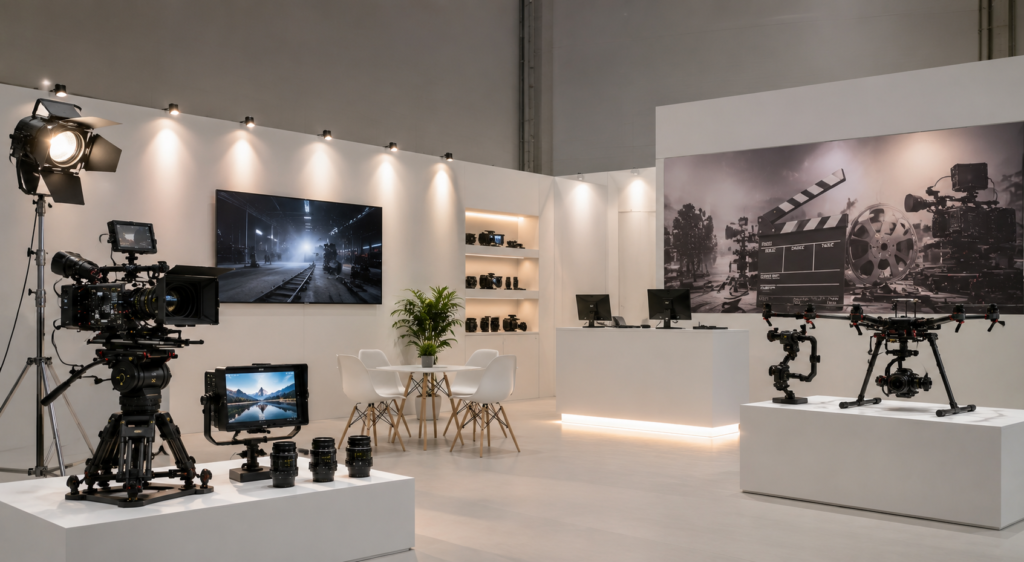
A professionally designed exhibition booth can communicate:
- Industry expertise
- Product quality
- Innovation
- Technical capabilities
- Company values
- Customer success stories
- Business reliability
Visitors are more likely to remember businesses that provide engaging demonstrations, knowledgeable staff, and meaningful conversations than those relying solely on online advertising.
3. Build Strategic Partnerships Across the Industry
One of the greatest strengths of a film industry trade show is its ability to connect businesses that complement one another. A production company may discover a new VFX partner, while a camera manufacturer might meet distributors looking to expand their product portfolio. These partnerships often extend beyond a single project and develop into long-term collaborations.
Face-to-face meetings allow companies to discuss business objectives, evaluate compatibility, and explore opportunities that are difficult to establish through emails or virtual meetings alone.
Potential Collaboration Opportunities
- Co-production partnerships
- Distribution agreements
- Technology integration projects
- Content licensing
- Studio service collaborations
- Equipment dealership opportunities
- Government-supported film initiatives
- International market expansion
- Investment partnerships
- Training and education collaborations
Businesses that actively network throughout the event often uncover opportunities they had not initially planned for, making exhibitions valuable beyond direct sales.
4. Demonstrate Products Through Live Experiences
Film and media technologies are best understood through hands-on demonstrations rather than brochures or online advertisements.
Whether showcasing professional cinema cameras, lighting systems, drones, editing software, AI-powered production tools, virtual production technology, or sound equipment, live demonstrations help visitors experience products in real-world scenarios.
Why Live Demonstrations Work
- Visitors can compare solutions instantly.
- Technical questions receive immediate answers.
- Buyers gain confidence before making purchasing decisions.
- Demonstrations create memorable experiences.
- Product capabilities become easier to understand.
- Teams receive direct user feedback.
Interactive booths generally attract more visitors than static displays because people naturally engage with experiences rather than passive marketing materials.
5. Launch New Products to the Right Audience
Introducing a new product or service at an industry exhibition offers immediate exposure to a highly targeted audience. Instead of relying solely on digital campaigns, exhibitors can present innovations directly to professionals who influence purchasing decisions.
Common product launches include:
- Cinema cameras
- Production equipment
- Editing software
- Visual effects solutions
- AI-powered filmmaking tools
- Virtual production technologies
- Broadcasting systems
- Film financing platforms
- Digital asset management solutions
- Cloud-based collaboration tools
Launching products in an environment filled with media professionals also increases the likelihood of press coverage, interviews, demonstrations, and industry discussions.
Frequently Asked Questions (FAQs)
1. What is trade show marketing in the film industry?
Trade show marketing is a business strategy where companies exhibit their products, services, or technologies at industry-specific events to connect directly with filmmakers, producers, studios, distributors, investors, and other professionals. It helps businesses generate qualified leads, build partnerships, increase brand visibility, and stay informed about the latest industry trends.
2. Why should film companies exhibit at trade shows?
Exhibiting allows film companies to showcase their expertise, meet potential clients, launch new products, network with decision-makers, discover emerging technologies, and explore investment or distribution opportunities. It is one of the most effective ways to build credibility within the entertainment industry.
3. How do film industry trade shows help generate business leads?
Trade shows attract professionals who are actively looking for production services, equipment, technology solutions, distribution partners, and business collaborations. This targeted audience makes it easier for exhibitors to engage with qualified prospects, resulting in higher-quality leads than many traditional marketing channels.
4. What should exhibitors prepare before attending a trade show?
Successful exhibitors should define clear business goals, design an engaging booth, prepare live product demonstrations, train their team, schedule meetings in advance, create marketing materials, establish a lead capture process, and develop a post-event follow-up strategy.
5. Are trade shows still valuable in the digital marketing era?
Yes. While digital marketing is essential for building online visibility, trade shows provide face-to-face interactions that build trust, strengthen relationships, and accelerate business discussions. Combining digital marketing with trade show participation often produces stronger long-term business results.
6. Which businesses benefit the most from film industry exhibitions?
A wide range of organisations benefit, including:
- Film production companies
- Production houses
- Studios
- OTT platforms
- Camera and lighting manufacturers
- Post-production companies
- VFX and animation studios
- Film distributors
- Broadcasting companies
- AI and media technology providers
- Film commissions
- Educational institutions
- Investors and service providers
7. How can businesses measure the success of exhibiting at a trade show?
Success can be measured through several key performance indicators, including:
- Number of qualified leads generated
- Business meetings conducted
- Partnership opportunities created
- Product demonstrations completed
- Sales enquiries received
- Revenue generated after follow-up
- Media coverage and brand visibility
- Customer feedback and engagement
Tracking these metrics helps businesses evaluate return on investment (ROI) and improve future exhibition strategies.
Conclusion
Trade show marketing continues to be one of the most effective growth strategies for businesses operating within the film, media, and entertainment ecosystem. Beyond generating leads, exhibitions create opportunities to build trusted relationships, showcase innovations, discover emerging technologies, attract investors, understand market trends, and establish meaningful partnerships across the entire filmmaking value chain.
As the industry becomes increasingly global and technology-driven, companies that actively participate in professional exhibitions are often better positioned to expand into new markets, strengthen their competitive advantage, and identify long-term business opportunities. Success at a trade show is not simply about having an attractive booth; it depends on strategic planning, valuable conversations, consistent follow-up, and a clear understanding of business objectives.
One example of a platform that brings these opportunities together is Film Expo India, a large-scale international film and media industry exhibition and B2B marketplace organised by Exhobuzz Pvt. Ltd. Scheduled to take place from 26–30 August 2026 at Bharat Mandapam, New Delhi, it brings together filmmakers, producers, studios, OTT platforms, distributors, investors, technology providers, exhibitors, government film bodies, and global entertainment professionals under one roof. Through exhibitions, panel discussions, networking sessions, business matchmaking, technology showcases, investment opportunities, and industry partnerships, it demonstrates how collaborative platforms can contribute to knowledge sharing, innovation, and sustainable growth across the global film business.